
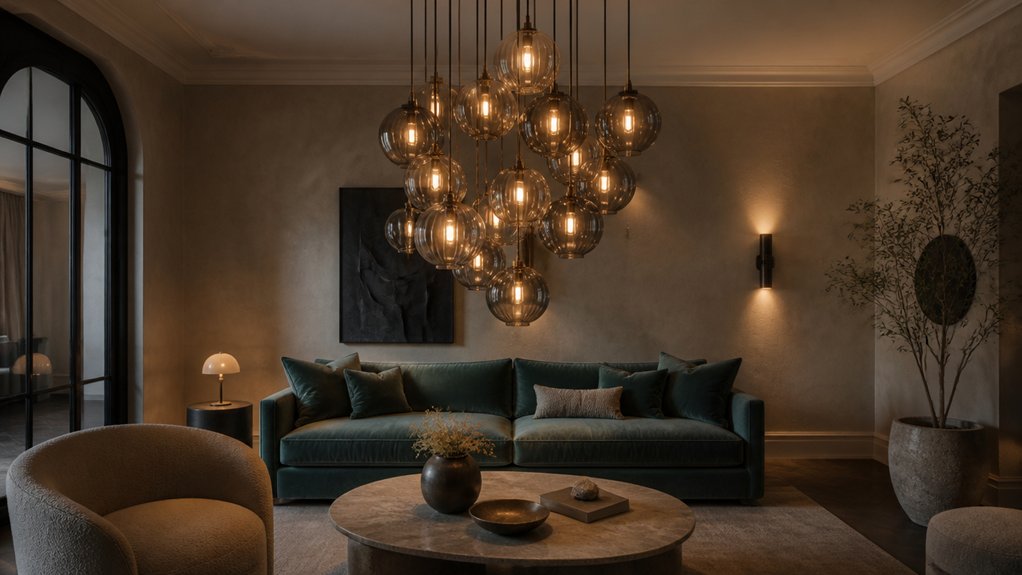
Lighting can influence how you perceive a room’s size, mood, and comfort, making it one of the most powerful tools in interior design. A well-chosen statement fixture does more than provide illumination: it draws the eye, highlights architectural details, and gives your space a distinct character. But even a striking design can fall flat if its scale, placement, or light quality is wrong. The right choices can change everything.
Key Takeaways
- Statement lighting creates an eye-catching focal point that adds personality and visual interest, even when switched off.
- The right fixture shapes a room’s mood, softens hard edges, and adds depth through contrasts of light and shadow.
- Choose a design that suits the room’s size, purpose, and décor—or contrasts with them intentionally for extra impact.
- Place fixtures thoughtfully: center them over functional areas, maintain clearances, and size them appropriately for the space.
- Layer statement lights with lamps, accent lighting, and dimmers to balance dramatic style with comfortable, adaptable illumination.
See How Statement Lighting Transforms a Room
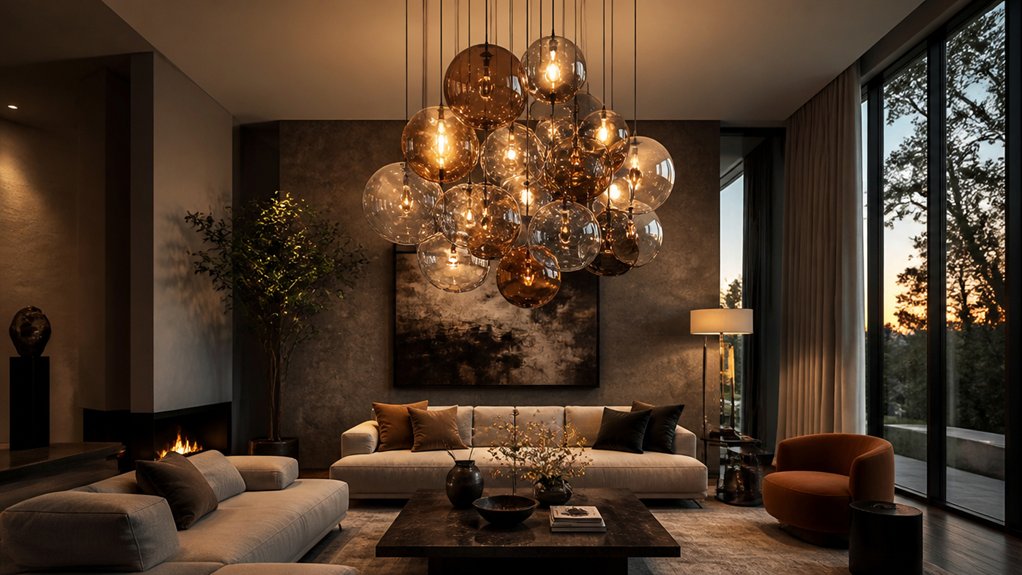
See how statement lighting transforms a room by drawing the eye, shaping the mood, and highlighting key features. A well-designed fixture does more than illuminate; it gives your space a clear focal point and a stronger sense of character.
Choose luxury fixtures with artistic designs, and you’ll add visual interest even when the lights are off. When switched on, their glow can soften hard edges, bring out rich textures, and make colors feel warmer or more vivid.
The contrast between light and shadow also adds depth, helping your room feel layered rather than flat. Statement lighting can express your taste without requiring a full renovation, creating a polished impression through one purposeful detail.
With the right fixture, you’ll change how your room looks and feels throughout the day, making ordinary moments more memorable.
Choose Statement Lighting for Your Room
When choosing statement lighting for your room, start with the space’s size, layout, and purpose. Consider how you use the room and the atmosphere you want to create.
A dining area might call for a striking chandelier that encourages conversation, while a living room could benefit from a sculptural pendant that adds character.
Match the fixture’s finish and materials to your existing décor, or use contrast to introduce a fresh focal point. Innovative fixtures can combine practical illumination with distinctive forms, helping you express your style without sacrificing function.
Look for artistic designs that feel intentional and complement your furnishings, colors, and architectural details. Before deciding, compare options and consider the light quality each provides.
The right choice will bring personality to your room and make everyday moments feel more memorable.
Get the Size and Placement Right
Get the size and placement right to make your fixture feel intentional and provide useful light. Start with scale considerations: a statement piece should suit the room’s dimensions without overwhelming furniture or disappearing overhead.
Then use these placement tips to balance impact and function:
- Above a dining table, choose a fixture roughly one-half to two-thirds of the table’s width.
- Hang dining lights about 30 to 36 inches above the tabletop, adjusting for ceiling height.
- Center a chandelier over the area you use, not necessarily the room’s midpoint.
- In living spaces, position pendants where they won’t obstruct sightlines or walkways.
- For tall ceilings, consider a longer fixture or adjustable suspension to keep light within view.
Measure before buying, and check that doors, cabinets, and people can move freely beneath your fixture.
Match Statement Lighting to Your Decor
Match statement lighting to your decor by choosing a fixture that complements the room’s colors, materials, and style without blending into the background. Consider the finishes already in your space, such as brass hardware, natural wood, or matte black accents. Repeating one of these details in your light fixture creates decor coordination and makes the design feel intentional.
You can also introduce a contrasting shape or texture to add visual interest while keeping the overall look cohesive. For example, a sculptural pendant can bring a modern edge to a traditional room, while a classic chandelier can soften contemporary furnishings.
Aim for style harmony, not a perfect match: your fixture should connect with the room’s character and still stand out as a focal point. Choose a design you’ll enjoy seeing every day.
Set the Mood With Light and Layers
To shape a room’s mood, combine statement lighting with softer, layered sources. Your chandelier or sculptural pendant can anchor the space, while smaller fixtures add comfort and flexibility. This layered illumination lets you adjust brightness for reading, entertaining, or unwinding without losing visual impact.
- Add dimmers so you can shift from lively gatherings to relaxed evenings.
- Pair a bold ceiling fixture with table lamps for a welcoming ambient glow.
- Use floor lamps to brighten dark corners and balance the room.
- Choose warm bulbs in living areas to create a more inviting atmosphere.
- Highlight artwork or architectural details with focused accent lights.
When each source serves a purpose, you control the room’s feel with ease. Keep fixture finishes and light temperatures coordinated, and your statement piece will stand out without overwhelming the space.
Leave a Reply