
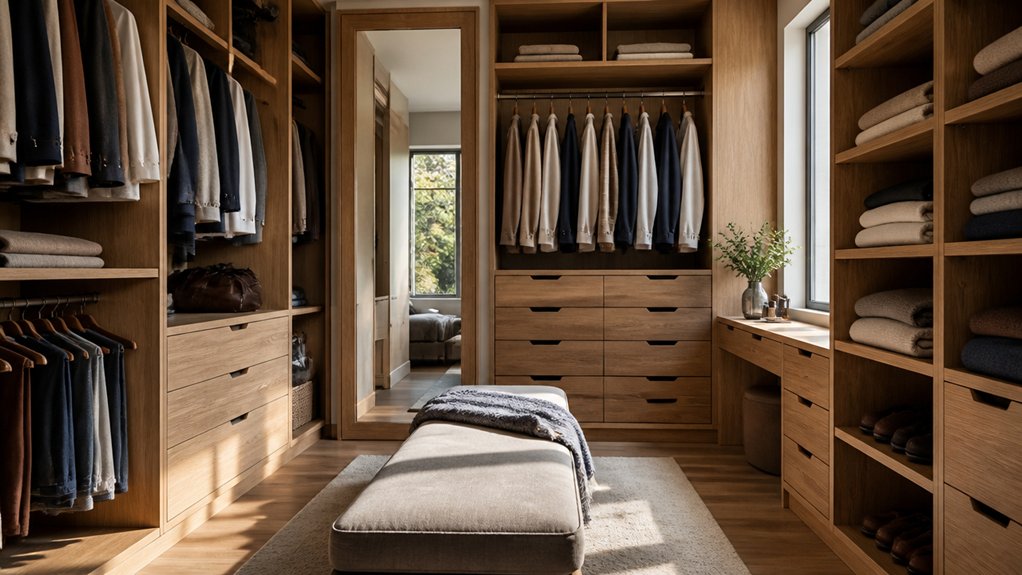
A well-planned walk-in wardrobe can make every morning feel like you’ve gained an extra hour. To create one that works for your home and daily routine, start by measuring the space, then plan clear access to the clothes and accessories you use most. The right combination of storage, lighting and mirrors can also improve the room’s practicality and appeal—but one common planning mistake can undermine it all.
Key Takeaways
- Measure the room carefully, including ceiling height, door swings, windows, alcoves, and other fixed features.
- Plan the layout around your daily dressing routine, keeping frequently used items accessible and pathways clear.
- Choose adjustable rails, shelves, drawers, and shoe storage to suit your wardrobe and adapt to changing needs.
- Layer ambient and task lighting, and position a full-length mirror for even illumination and easy outfit checks.
- Organize clothes and accessories by type or season, using dividers and labeled storage to keep everything accessible.
Measure Your Walk-In Wardrobe Space
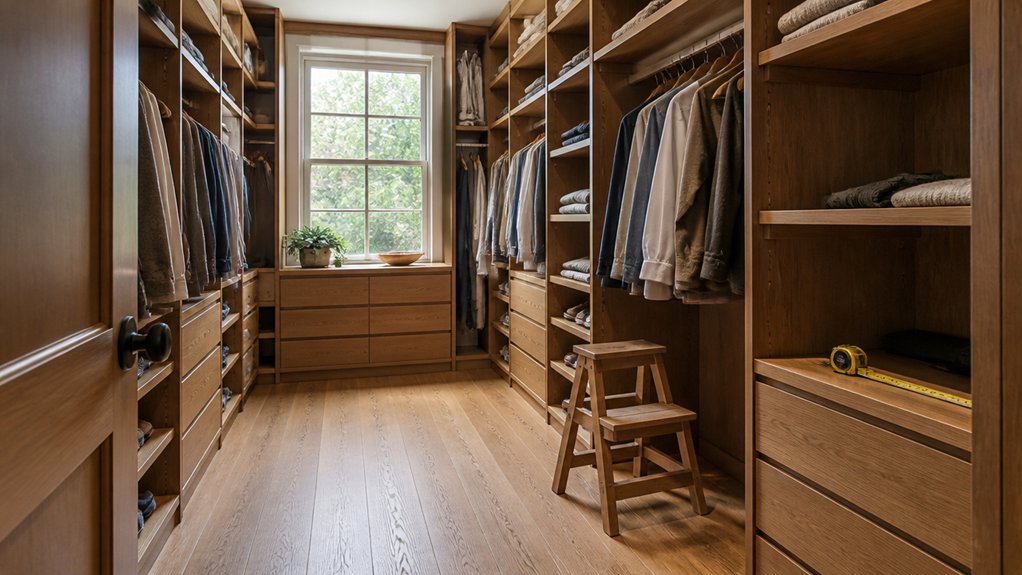
Before choosing cabinetry or storage fittings, measure your walk-in wardrobe’s width, length and ceiling height. Record each dimension in a simple sketch, noting doors, windows, sloped ceilings, alcoves and fixed features such as radiators. These details reveal usable wall space and help you avoid costly ordering mistakes.
Measure clearances around door swings and any changes in floor level, too. If the room has an unusual shape, take measurements at several points rather than assuming the walls run parallel. Accurate figures support better space utilization, so you can compare storage options that genuinely fit instead of relying on estimates.
Consider how the room’s proportions relate to your home’s architectural style. A well-measured wardrobe can feel integrated with the property, protect its value and make future installation smoother. Keep your measurements handy when requesting quotes.
Plan a Layout Around Your Daily Routine
Once you’ve measured the room, plan the layout around how you get dressed each day. Map your usual route from choosing clothes to checking your appearance, then position key areas to keep movement natural. A considered plan makes the wardrobe feel more spacious and can strengthen your home’s everyday appeal.
- Put your most-used areas within easy reach, so busy mornings feel simpler.
- Leave a clear path between entry, dressing space, and mirror to prevent bottlenecks.
- Allow flexibility for Fashion trends and Wardrobe maintenance, so your layout can adapt as needs change.
Think about who shares the room, when each person gets ready, and where doors or windows affect access. Mark these zones on your measured plan before committing to built-in features. You’ll avoid costly changes and create a practical space that supports your routine for years.
Choose Storage for Clothes, Shoes, and Accessories
What you store should shape the storage you choose. Take stock of your wardrobe before selecting fittings: count hanging garments, folded clothes, shoes, bags, and smaller accessories. This helps you allocate space efficiently and avoid paying for storage you won’t use.
Use double hanging rails for shirts and trousers, with full-height sections for dresses and coats. Custom shelving can accommodate folded knitwear, handbags, or awkward corners, while adjustable shelves let you adapt the layout as your needs change.
Choose sturdy shoe racks that keep pairs accessible without wasting valuable floor space.
Add drawers for underwear and accessories, then use Drawer dividers to keep small items sorted. A considered mix of hanging, shelving, and concealed storage makes your wardrobe easier to maintain and more appealing to future buyers. It also protects garments from overcrowding and creasing.
Add Lighting and Mirrors for Easier Dressing
Good lighting and well-placed mirrors make a walk-in wardrobe easier to use and more appealing to buyers. Layer ambient lighting with focused task lights so you can judge colours accurately and dress comfortably at any time. Choose efficient LEDs to reduce energy use and heat, while dimmers let you adjust brightness to suit the moment.
Position decorative mirrors to reflect light and make the space feel larger, but check that each gives you a clear, full-length view.
- Place ceiling lights to brighten the whole wardrobe without casting harsh shadows.
- Add lights near the mirror for even illumination when choosing an outfit.
- Select mirror styles and fittings that complement your home’s finishes and support resale appeal.
Thoughtful lighting and mirror placement can turn a practical dressing area into a polished feature buyers remember.
Keep Clothes, Shoes, and Accessories Organised
When every item has a place, your walk-in wardrobe stays tidy and works harder for everyday living. Use clothing categorization to group garments by type, colour, or occasion, so you can find what you need quickly.
Install adjustable rails, drawers, and shelves to suit your collection and make the most of available space.
Store shoes on slanted racks or in clear boxes, keeping pairs visible and floors clear.
Add trays or dividers for belts, jewellery, and other small accessories; these details prevent clutter and protect your belongings.
Plan seasonal rotation by moving off-season clothes to higher shelves or labelled storage boxes.
Keep everyday pieces at eye level for easy access.
A well-organised wardrobe saves time, preserves clothing, and makes your home feel more considered to buyers.
Leave a Reply