
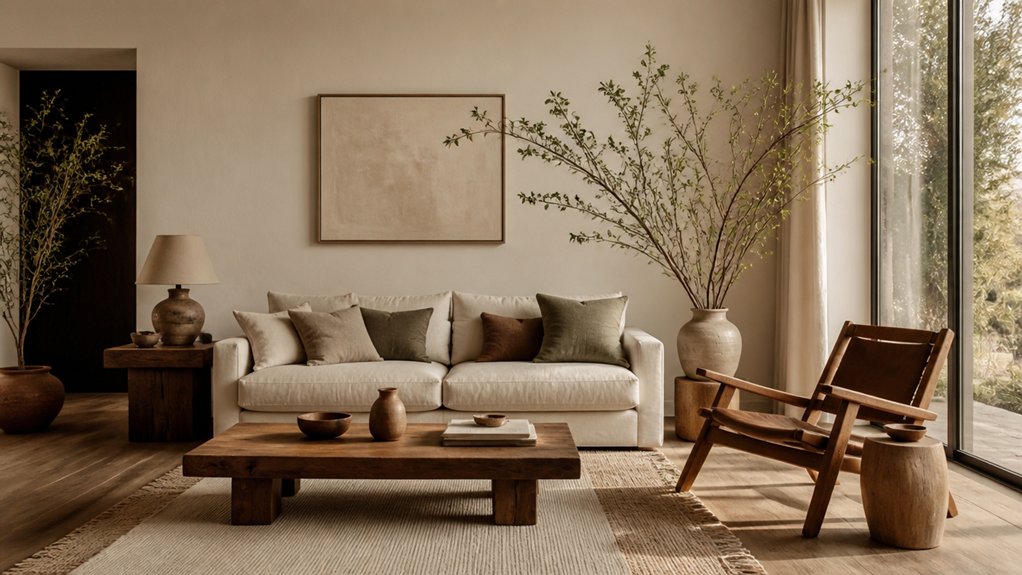
Picture morning light falling across a linen sofa, warm wood, and walls in soft cream. These details create a home that feels current without chasing every new trend. When you choose natural materials, a warm neutral palette, and well-made furniture, you can build a space that serves your daily needs and holds its appeal over time. The right finishing touches can make it feel unmistakably yours—and they’re often simpler than you think.
Key Takeaways
- Choose durable natural materials like wood, stone, wool, and linen for lasting warmth and character.
- Build a versatile foundation with warm neutrals, testing paint samples in different lighting before committing.
- Select classic, well-proportioned furniture that suits daily routines and can be repaired or updated.
- Layer contrasting textures—such as linen, leather, wool, and woven rugs—to add depth without relying on fleeting trends.
- Personalize rooms with meaningful keepsakes and vintage accents, balancing character with comfort and minimal clutter.
Choose Natural Materials for Timeless Design
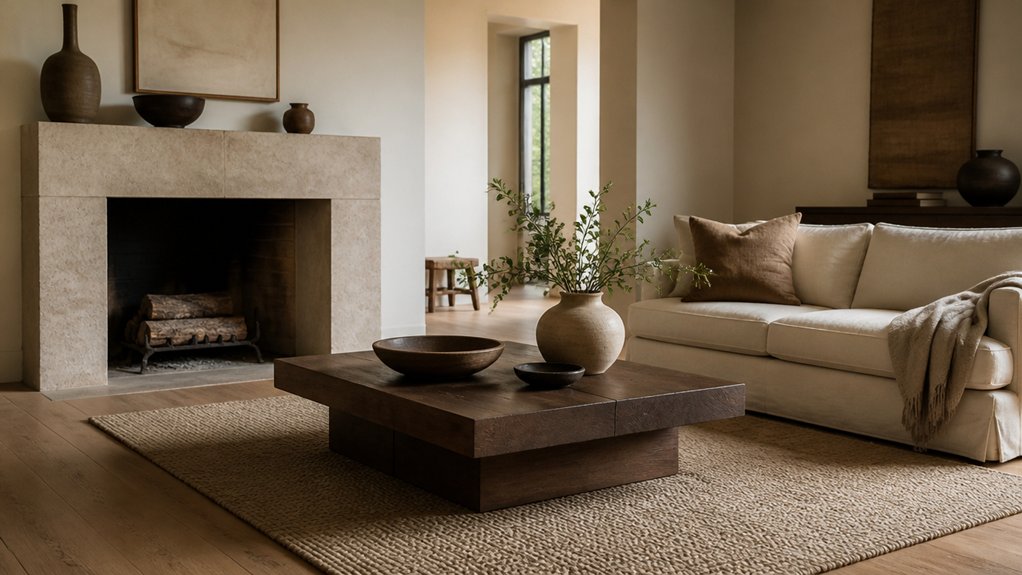
Natural materials bring warmth and lasting appeal to a home. Choose solid wood, stone, wool, and linen for surfaces and furnishings you’ll use every day. Their natural variation adds character, while durable options can reduce replacement costs over time. Before buying, compare samples in your home’s light and check how each material handles wear, cleaning, and moisture.
Ask retailers about Sustainable sourcing, including certified wood and responsibly produced textiles. Clear documentation helps you assess quality and environmental claims, not just marketing language.
Organic finishes, such as low-VOC oils and sealants, can help limit indoor pollutants while preserving a material’s texture. Confirm care requirements, too; some surfaces need periodic sealing or gentle cleaners.
Build a Timeless Palette With Warm Neutrals
Warm neutrals create a versatile backdrop that feels inviting without dating quickly. Choose creamy whites, soft taupes, and muted sands to make your rooms feel connected while keeping them easy to update. These shades suit changing tastes and can help your home appeal to future buyers without making it feel generic.
Use Color psychology to guide your choices: warmer undertones can add comfort, while lighter neutrals help smaller spaces feel open. Test paint samples in morning and evening light before committing, since natural and artificial lighting can shift their appearance.
Apply Feng shui principles by balancing earthy tones with natural light and avoiding stark contrasts that disrupt a room’s calm. Then add color through affordable accents you can replace as your needs or preferences change. This approach keeps your palette cohesive, practical, and personal.
Pick Classic Furniture Shapes That Last
With a warm neutral palette in place, choose furniture with clean lines and balanced proportions that won’t feel dated as trends change. A well-scaled sofa, a sturdy dining table, and a simple wood-frame chair can anchor your rooms through changing styles.
Before buying, measure your space and check how each piece supports daily routines, from hosting guests to relaxing after work.
Prioritize durable construction and repairable materials; quality often costs more upfront but can serve you longer than trend-driven alternatives.
Keep silhouettes versatile, then add personality with Vintage accents or Antique finishes that complement your existing pieces.
You don’t need a matching set: combine shapes thoughtfully, repeating a finish or proportion for cohesion.
When a piece feels comfortable, functional, and easy to update, you’re more likely to keep it—and spend wisely over time.
Layer Textures for a Welcoming, Timeless Home
To make classic furniture feel inviting, layer textures that add depth without clutter. Pair a smooth leather sofa with a nubby wool throw, linen cushions, or a woven rug. These contrasts make your room feel warmer while keeping its foundation polished.
If you prefer minimalist decor, choose a restrained palette and vary texture instead of adding more objects. Think matte ceramics, natural wood, and soft cotton. A tactile mix gives a simple space dimension without making it feel busy.
Use vintage accents thoughtfully: an aged brass lamp or a timeworn side table can balance newer finishes and lend character. Before you buy, consider how each material will wear and how easily you can clean it. Durable, easy-care fabrics help your home stay welcoming through everyday use, while thoughtful layers keep classic furniture feeling fresh.
Add Personal Details That Make a Home Yours
Once you’ve established a timeless foundation, personal details make it feel like your home. Choose pieces that reflect how you live, not just what’s trending. A framed family photograph, a travel find, or a handmade bowl can add character without overwhelming a room. These objects bring personal stories into your design and help guests understand what matters to you.
You don’t need to display everything at once. Rotate collections seasonally, group smaller items on a tray, or give a meaningful piece room to stand out. Thoughtful placement keeps sentimental decor from feeling cluttered and lets each item earn its place.
When you shop for new furnishings, consider how they’ll complement these keepsakes. The result feels polished yet personal—and stays relevant as your tastes and needs change. Make choices that support daily use, too, so beauty and comfort work together.
Leave a Reply