
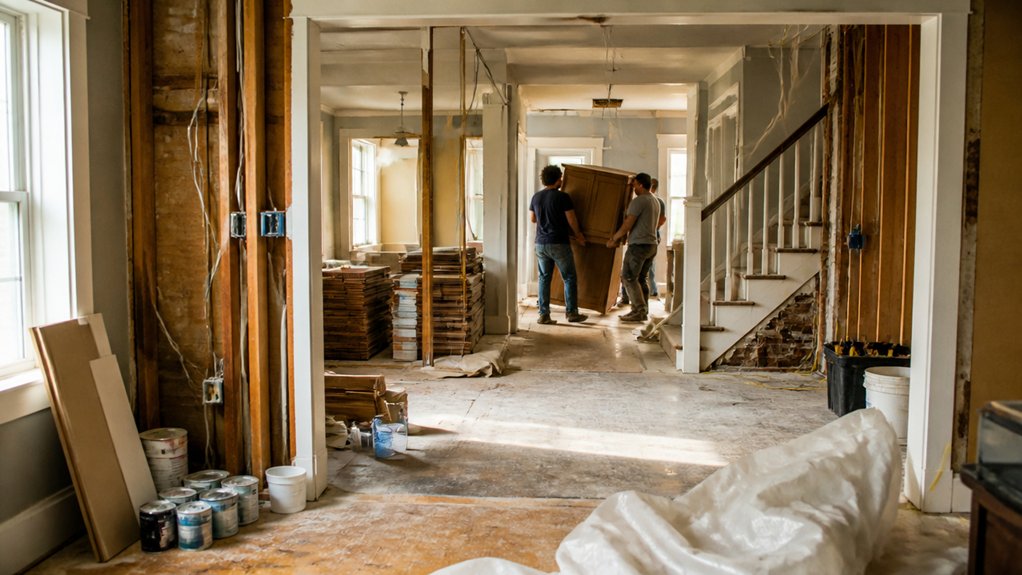
A whole-house renovation can feel like opening Pandora’s box: each improvement may uncover another problem. You’ll need to manage permit delays, material shortages, and budget pressure while keeping work safe and on track. Hidden water damage or faulty wiring can force urgent repairs and change your plans. The hardest part isn’t always the repair itself—it’s deciding what to do next when time and money are already stretched.
Key Takeaways
- Keeping renovation costs under control required tracking commitments, comparing detailed estimates, and prioritizing essential repairs over upgrades.
- Delays from permits, unavailable materials, and hidden repairs made realistic schedule buffers and regular check-ins essential.
- Living amid construction disrupted routines, access, and quiet spaces, requiring temporary setups and clear household protocols.
- Hidden damage behind walls required documentation and qualified inspections of structural, electrical, plumbing, and moisture issues.
- Unexpected repairs forced us to pause, prioritize safety, revise the budget, and coordinate new work sequences and permits.
How We Controlled Whole-House Renovation Costs

We controlled whole-house renovation costs by setting a firm budget before work began, then tracking every commitment against it. During budget planning, you should separate essential repairs from upgrades and assign realistic allowances for materials, labor, permits, and contingency.
We reviewed estimates line by line, clarified exclusions, and compared equivalent scopes rather than choosing the lowest headline price. Careful contractor selection mattered: you’ll want written bids, verified references, appropriate insurance, and a clear payment schedule.
We also documented every change before approving it, including its cost and effect on the remaining allowance. A shared spreadsheet helped us monitor invoices, deposits, and projected totals, so small overruns didn’t disappear into the overall spend.
When prices shifted, we adjusted finishes or deferred nonessential purchases instead of compromising safety or workmanship.
How We Managed Whole-House Renovation Delays
Even with costs under control, whole-house renovations can lose time to permit reviews, backordered materials, and unexpected repairs. You can limit disruption by building realistic buffers into the schedule and confirming approval requirements before work begins. Ask your contractor to map task dependencies, so a delay in one room doesn’t stall unrelated work elsewhere.
Use weekly check-ins to review milestones, open decisions, and risks. When a product becomes unavailable, quick Material sourcing from approved alternatives can keep crews moving, provided you verify dimensions, performance, and lead times.
Make Design adjustments early when field conditions require changes; late revisions often trigger new approvals and rework. Keep decisions in writing, assign someone to follow up on suppliers and inspectors, and update the schedule as facts change.
You can’t prevent every delay, but clear priorities and prompt decisions help contain its impact.
What Living Through Renovation Was Really Like
A realistic schedule can limit delays, but it can’t make living through renovation easy. You’ll need to adjust daily routines as crews move between rooms, tools occupy shared spaces, and familiar comforts disappear.
Even simple tasks, such as cooking or finding a quiet place to work, may require advance planning. Set up a temporary kitchen, protect a clean retreat, and agree on household access with your contractor before work begins.
Noise, dust, and limited privacy can wear you down, especially when decisions keep arriving. Design dilemmas may feel more urgent when you’re choosing finishes amid disruption, so establish priorities and decision deadlines early.
You’ll also face renovation frustrations when rooms remain unusable longer than expected. Track practical needs, communicate concerns promptly, and build small breaks into your routine.
These steps won’t remove the strain, but they can make the experience more manageable.
What We Did When Walls Hid Problems
Just as daily routines can shift without warning, opening walls can expose problems no one could see during planning. Once demolition revealed hidden damage, you needed to pause and assess the evidence rather than assume its cause. We photographed affected areas, noted locations, and asked qualified tradespeople to inspect framing, wiring, plumbing, and moisture conditions.
Their findings helped distinguish cosmetic issues from safety concerns. If you encounter structural surprises, don’t cover them or rely on a quick visual guess. Request a professional evaluation and keep inspection notes with your renovation records.
You should also confirm that any required permits and code checks are addressed before work resumes. Clear documentation gives you a reliable account of what the team found and what it verified, while careful inspections protect the integrity of the finished rooms.
How We Changed Plans After Unexpected Repairs
Once inspections confirmed the unexpected repairs, we revised the renovation plan to address them before moving ahead. You’ll need to prioritize safety and building integrity over cosmetic work, especially when damaged wiring, plumbing, or framing affects later installations.
We paused the related tasks, obtained clear repair estimates, and checked how each delay would affect labor, materials, and the overall schedule. These unexpected repair surprises also required us to protect the budget, so we separated essential fixes from optional upgrades and postponed lower-priority purchases.
Before restarting, we confirmed that contractors understood the revised sequence and that permits or inspections wouldn’t create further delays. Thoughtful plan adjustments helped you avoid covering defects, repeating finished work, or making rushed decisions.
Leave a Reply