
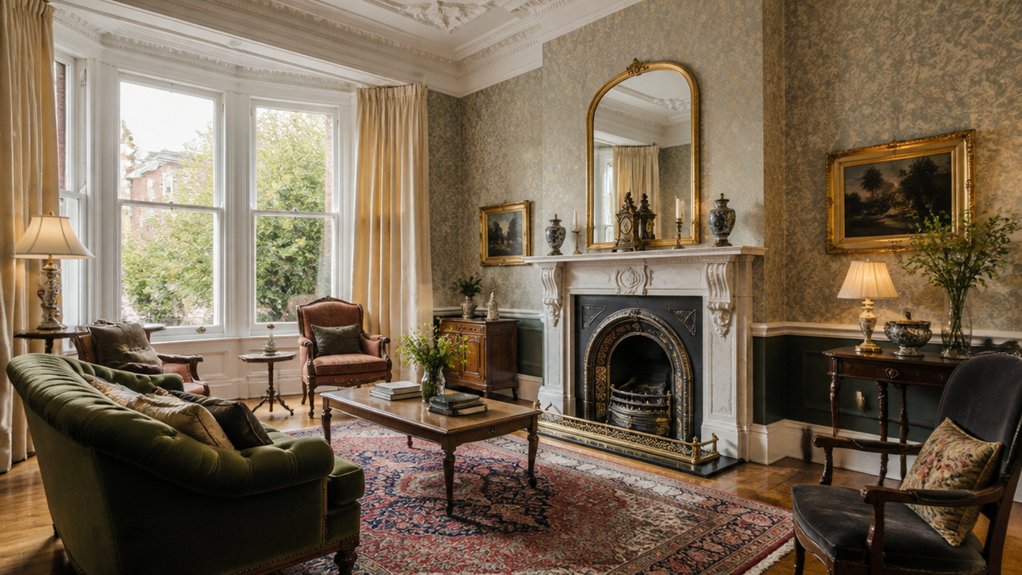
Original fireplaces feature in many Victorian homes, yet a damaged hearth can compromise both safety and the room’s appeal. If you’re restoring a living room, you can make the fireplace its centrepiece while preserving the tiles, ironwork, and surround that give it character. The right colours, materials, and furniture can bring the whole space together—but first, you’ll need to know what to inspect before the restoration begins.
Key Takeaways
- Inspect the mantel, surround, hearth, ironwork, and chimney for cracks, loose pieces, corrosion, moisture, and signs of smoke or heat damage.
- Photograph existing details and document their condition; use qualified specialists for flues, firebacks, gas connections, and historic structural repairs.
- Choose period-inspired colours, wallpaper, and fabrics, testing paint beside the fireplace in daylight and lamplight.
- Arrange seating around the hearth, keeping pathways clear and measuring furniture to suit the room.
- Add layered lighting and coordinated Victorian-style accents, such as brass fixtures, framed mirrors, patterned rugs, and cushions.
Inspect Your Victorian Fireplace for Damage and Safety

Before restoring your Victorian fireplace, inspect it carefully for damage and safety hazards. Look closely at the mantel, surround, tiles, and ironwork for cracks, loose pieces, corrosion, or missing details.
Check the hearth for uneven surfaces, damaged joints, and signs of past heat damage; these flaws can affect both safety and the room’s finished appearance.
Examine the fireplace chimney for staining, crumbling mortar, and evidence of moisture, which may point to hidden deterioration.
Note soot deposits, smoky odours, or drafts that could signal ventilation concerns.
Photograph each feature and record its condition before planning hearth restoration.
A careful assessment helps you preserve original character, avoid costly surprises, and make informed choices that protect your home’s value.
Keep the inspection focused on what you can see, and document concerns for your project plan.
Repair the Fireplace or Call a Specialist
Once you’ve documented the fireplace’s condition, decide which repairs you can safely handle and which need a specialist. Careful fireplace restoration protects your home’s character while supporting safety and long-term value.
You can clean accessible surfaces gently, but leave structural or working parts to qualified tradespeople.
- Loose bricks or crumbling mortar deserve prompt attention.
- Cracked firebacks can threaten safe use.
- Damaged flues need professional inspection and repair.
- Gas connections require a licensed specialist.
- Historic details deserve careful, informed handling.
A specialist consultation helps you understand the scope, costs, and risks before work begins. Ask for references, insurance details, and a written estimate covering materials and labour.
Don’t light the fire until a professional confirms it’s safe. Choosing skilled help now can prevent costly damage later—and let you enjoy the fireplace with confidence.
Choose Victorian Colours and Materials for Your Living Room
To give your Victorian living room a cohesive look, choose colours and materials that complement its original features. Deep greens, burgundy, navy, and warm neutrals bring period character while making the fireplace’s carved details stand out. Test paint samples beside the mantel in daylight and lamplight before committing; the right shade can unify the room without overwhelming it.
Explore Victorian wallpaper patterns with botanical motifs, damask designs, or subtle stripes to add texture and historical appeal. For a refined finish, paper one feature wall or select a small-scale print that suits your room’s proportions.
Make considered Victorian fabric choices, such as velvet, brocade, or woven wool, for curtains and upholstery. Pair rich textures with durable, easy-care materials where daily use demands them.
Choose a restrained palette, and your original features will feel distinctive, coordinated, and ready to impress buyers and guests alike.
Arrange Living Room Furniture Around the Fireplace
Arrange seating around the fireplace to make its carved mantel the room’s focal point while keeping conversation easy. Thoughtful Furniture placement highlights Victorian craftsmanship and helps buyers picture a welcoming, usable home. Keep the hearth accessible, and leave enough space for comfortable movement.
- Set a sofa opposite the fireplace to create a natural gathering point.
- Angle armchairs toward the hearth so guests can talk without straining.
- Choose Seating arrangements that balance the mantel’s visual weight.
- Preserve clear routes between the doorway, windows, and seating.
- Use a compact table within reach, but don’t crowd the hearth.
Measure each piece before moving it, especially in a narrow room. A well-proportioned layout protects historic features, supports everyday comfort, and makes the original fireplace feel like the room’s true centrepiece.
You’ll create a space that feels both authentic and ready to enjoy.
Add Lighting and Finishing Details
Layered lighting brings a Victorian living room’s carved details and rich finishes into focus. Start with ambient lighting from a dimmable ceiling fixture, then add wall sconces to frame the original fireplace and cast a warm glow across the mantel.
Position a shaded floor lamp beside your reading chair for practical, inviting light. Choose brass, bronze, or crystal finishes that complement the period architecture without competing with its craftsmanship.
Finish the room with decorative accents that feel collected, not cluttered. Arrange a few antique candlesticks, a framed mirror, or a small artwork on the mantel, keeping the fireplace’s surround visible.
Repeat your chosen metal in picture frames or lamp bases to create cohesion. Add textured cushions and a patterned rug to soften the seating area.
These considered details make your restoration feel polished, personal, and ready to enjoy.
Leave a Reply