

Clutter has a way of reclaiming a hallway, one pair of shoes or dropped bag at a time. If you’re short on space, the area beneath your stairs can give everyday items a practical home without narrowing the walkway. With shelving, baskets, or a slim cabinet fitted to the stair’s angle, you can make your entryway feel more open and easier to manage. The key is choosing storage that works with your routine—and knowing what to put where.
Key Takeaways
- Under-stair storage gave everyday shoes, bags, coats, and umbrellas a convenient home, clearing the main walkway.
- Shelves fitted to the stair angle and decorative baskets used awkward space for small items and belongings.
- Easy-access drawers, sliding doors, and pull-out baskets made stored items simpler to find without obstructing the hallway.
- Sorting belongings before storing them prevented unnecessary items from filling the newly organized space.
- Assigning each item a place and tidying for five minutes nightly helped keep the hallway clutter-free.
Why Hallway Clutter Keeps Coming Back
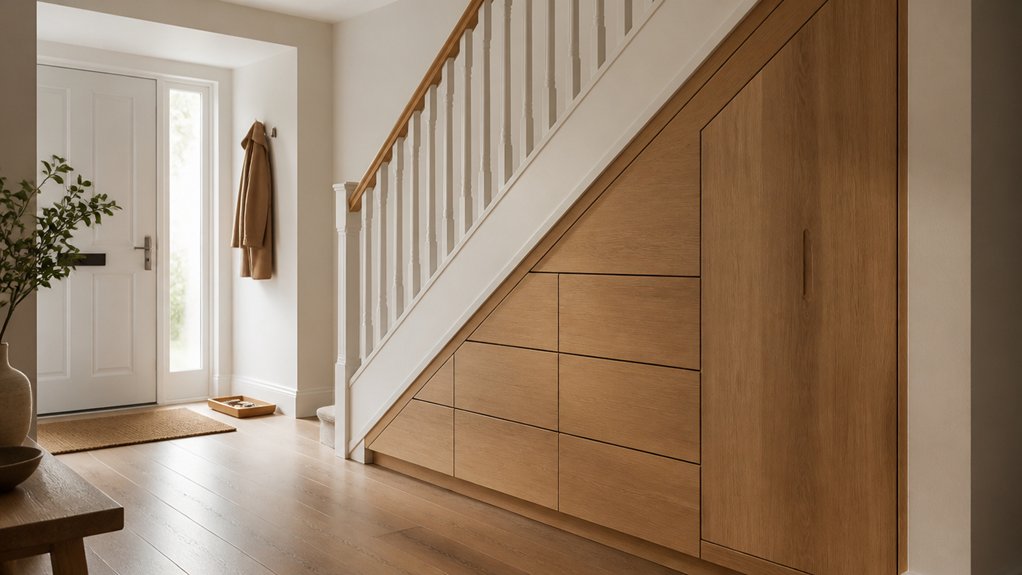
Hallway clutter keeps returning when everyday items lack a convenient place to land. You drop keys, bags, shoes, and mail wherever you arrive, especially when you’re tired or rushing. Without a clear routine, those small choices quickly crowd a narrow walkway and make the whole home feel less orderly.
Clutter psychology explains why the cycle sticks: visible piles invite more items, while searching for essentials adds stress. You can interrupt that pattern by assigning each frequently used item a simple destination and clearing it regularly. Keep the system easy enough to follow on busy days; complicated rules rarely last.
Digital organization can help you track household tasks, reminders, or donation lists, but it won’t replace practical habits. When every object has a reachable place, you save time, protect precious floor space, and make leaving home smoother.
Under-Stair Storage Ideas for a Tidier Hallway
If your stairs leave an awkward nook, turn it into a practical storage zone. Start by measuring the full height and depth, then choose a layout that fits without narrowing your hallway.
Creative shelving can follow the stair angle, making use of low corners while keeping the design open and affordable. Add a few Decorative baskets to soften the look and gather small items neatly.
If you rent or want a quick update, use freestanding shelves or a slim bench rather than paying for built-ins. For a polished finish, match baskets and hardware to your existing décor, and leave enough clearance for doors and foot traffic.
Good lighting helps you see the whole nook, while a simple, consistent arrangement keeps the area looking calm. You’ll gain useful storage without sacrificing valuable floor space.
What to Store Under the Stairs
Once you’ve chosen a layout, decide what belongs in the nook based on its size and accessibility. Store items you use often, such as shoes, bags, umbrellas, and everyday outerwear, near the entrance.
If your space is deeper, dedicate it to seasonal coats, spare linens, or sports gear you don’t need daily. Creative shelving can turn awkward angles into useful spots for books, cleaning supplies, or neatly folded blankets.
Use Decorative baskets to group gloves, pet leads, and small accessories, keeping loose items from spreading across the hallway.
Before filling the nook, sort belongings and donate or recycle anything you no longer need. Assign each category a home, and leave some breathing room so the storage stays useful rather than becoming another place to hide clutter.
Choose Under-Stair Storage That’s Easy to Reach
Choose doors and drawers that let you reach stored items without blocking the hallway. Sliding doors work well where a swing door would crowd the walkway, while full-extension drawers bring items at the back within easy reach. Match each opening to what you’ll store, so you don’t pay for oversized fittings or waste useful depth.
Add customizable shelving to adjust the space for shoes, bags, or taller household gear. Place frequently used items at a comfortable height, and reserve deeper areas for things you need less often.
Pull-out baskets can make awkward corners more accessible without adding bulky furniture.
Use hidden compartments for valuables or small essentials, but make sure you can open them easily. Before choosing hardware, measure the stair slope and hallway clearance.
A well-planned layout helps you use every inch without making access difficult.
Simple Habits to Keep Hallway Clutter Away
Even well-planned under-stair storage can fill up without a few simple habits. Give every item a designated place, and return shoes, bags, and coats as soon as you come home. A small basket can catch keys and mail, but empty it regularly so it doesn’t become another clutter pile.
Set aside five minutes each evening to clear the hallway and check that storage doors close easily. This routine supports Habit formation and keeps narrow walkways open.
Review stored items once a month; donate or discard anything you no longer use, rather than making room for it elsewhere.
Keep Decor organization simple: limit visible accents to one or two pieces, and leave surfaces clear for daily essentials. When each item earns its space, you’ll spend less time tidying and enjoy a calmer, more usable entryway.
Leave a Reply