
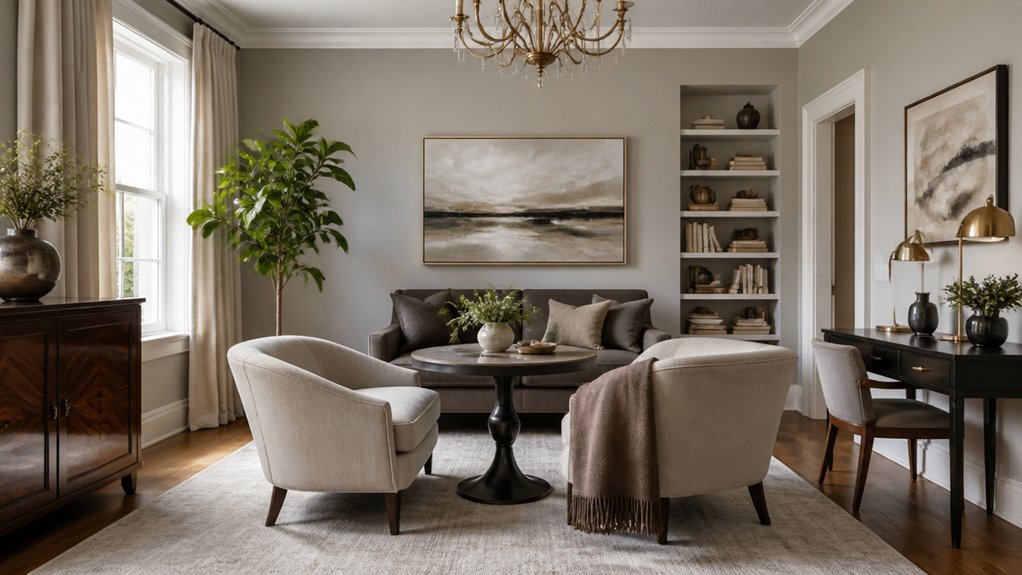
An unused dining room can add real value to your home when it serves more than one purpose. Start by deciding whether you need a home office, family hub, guest area, or a mix, then choose furniture and storage that won’t crowd the room. With a flexible layout, you can make the space work day to day and still restore it for dining when needed. The key is planning for each shift before you move a thing.
Key Takeaways
- Choose a primary purpose, such as a home office or cozy lounge, and add one secondary use the room can comfortably support.
- Measure the room, furniture, doorways, and clearances; arrange pieces to preserve walkways, window access, and outlet access.
- Select space-saving, adaptable furniture such as a sleeper sofa, drop-leaf table, nesting tables, or storage ottoman.
- Create practical zones with a desk or central work surface, task lighting, rugs, and labeled storage bins.
- Keep the room easy to convert with lightweight furniture, removable accents, and nearby storage for linens and supplies.
Choose How You’ll Use Your Dining Room
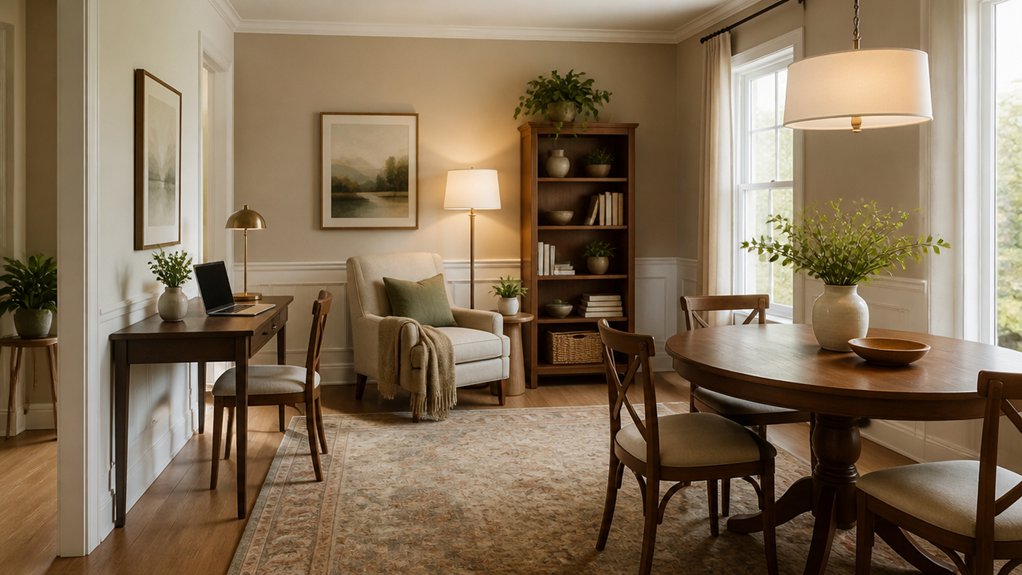
Before moving furniture, decide what the room needs to do for your household. List the activities that would make the biggest difference, such as working from home, hosting guests, helping children with homework, or relaxing together.
Choose one primary purpose and, if the room can support it, one secondary use. This keeps your investment focused and helps you avoid buying features you won’t use.
Consider how your choice affects the property’s appeal. A dining room converted into a well-defined office or sitting area can add useful function, but preserve a clear sense of purpose for future occupants.
Check access to outlets, daylight, and nearby storage before committing.
Select Lighting options that suit each activity, then use Decorative accents to connect the room visually with adjoining spaces.
Set a realistic budget before making changes.
Plan a Flexible Layout and Choose Space-Saving Furniture
Once you’ve chosen the room’s main uses, arrange furniture to support them without blocking pathways or making the space feel crowded. Keep a clear route between the doorway and adjoining rooms, and leave enough space to pull out chairs or open storage.
Choose pieces that earn their footprint: a drop-leaf table, nesting tables, stackable chairs, or a storage bench can adapt as your needs change. Measure the room and furniture before buying, including clearance around doors and windows.
Use a rug to define the central zone without dividing the floor plan. Select lighting options that suit different activities, such as a dimmable ceiling fixture paired with a movable lamp.
Add Decorative accents sparingly; a mirror or compact artwork can add character without consuming useful surface area. Store occasional-use items neatly.
Set Up a Dining Room Office or Family Hub
With the layout and furniture in place, assign the room a clear secondary role: a home office for focused work or a family hub for shared activities.
For work, position your desk near an outlet and add closed storage for supplies, paperwork, and devices. Use a screen or cabinet to separate work materials from the rest of the room, keeping the space orderly when you’re off the clock.
For a family hub, create a central surface for homework, crafts, or household planning, with labeled bins that make cleanup simple.
Choose lighting options suited to each task, such as a focused desk lamp or adjustable overhead fixture.
Add decorative accents that reflect your home’s style without crowding usable surfaces.
This defined setup helps your property function better and keeps daily routines organized.
Make Room for Guests or a Cozy Living Area
A dining room can also serve as a guest room or a comfortable place to unwind. Choose furnishings that support both uses without overcrowding the floor plan. A compact sleeper sofa gives guests a proper bed and provides everyday seating, while a storage ottoman keeps extra linens close at hand.
- Define the layout: Position the sofa along a wall, preserving a clear path through the room and access to windows.
- Add useful comfort: Layer washable throws and cushions, and place a slim side table within easy reach.
- Set the mood: Use Artistic lighting with dimmable bulbs for reading or evening relaxation. Add Wall decorations to give the space a finished, welcoming look.
Before buying pieces, measure doorways and furniture footprints. A well-planned arrangement can improve daily comfort and make your property more appealing to visitors.
Make It Easy to Switch Back to Dining
If you may need the room for meals again, choose furnishings that are easy to move or fold away. A lightweight sofa, nesting tables, and stackable chairs let you clear the floor quickly without heavy lifting.
Keep a dining table in a nearby storage area, or select a drop-leaf model that can serve as a desk between meals. Use a rug that rolls up easily, and avoid anchoring furniture with permanent fixtures.
Store table linens, serving pieces, and chair cushions together in labeled bins so you can reset the room efficiently. Choose neutral color schemes for larger pieces, then add seasonal decor through removable accents.
This approach protects your investment, keeps conversion costs low, and helps the room adapt to changing needs without sacrificing everyday comfort or resale appeal.
Leave a Reply